Breaking Generational Patterns for women in business

It begins in the body
For women breaking generational patterns in their lives and businesses, the work rarely starts where we expect it to.
It doesn't begin with a new strategy or a mindset reframe.
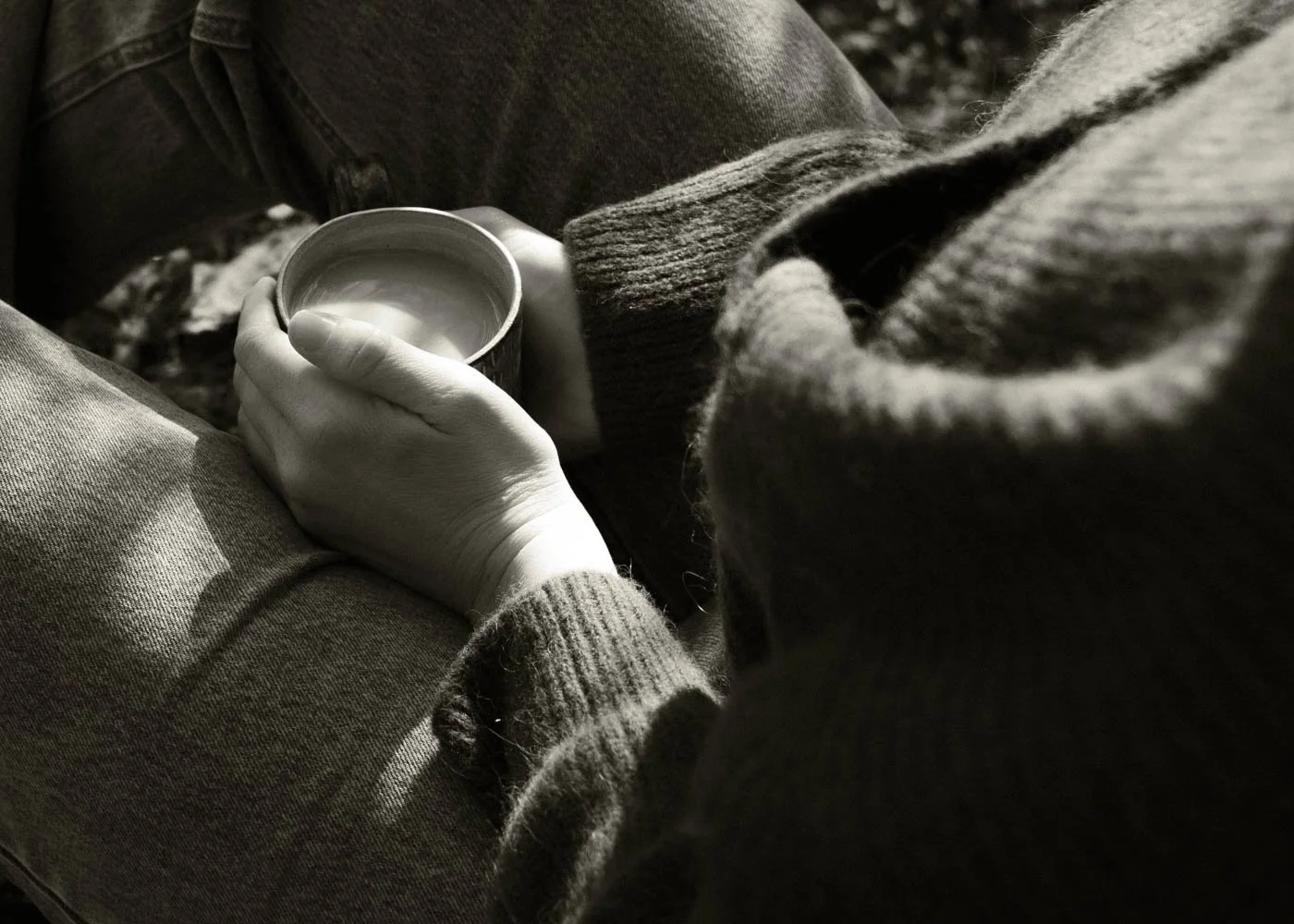
It begins in the body - in the tightening of a throat, the knot of unexplained fear, the ancient contraction that moves through us when we move towards being seen.
Understanding why that happens changes so much - including how you show up in your work.
A ducking stool and a reckoning
I'm standing on a bridge in the old part of Canterbury, about twenty minutes into a walking tour of the city. (Yes, I'm a big geek!)
The tour guide has stopped us to look at a replica of the medieval ducking stool used in the city for centuries.
Ducking was a form of punishment - social humiliation, used mostly against women between the 13th and 17th century. A woman would be strapped in her underwear to this chair and repeatedly dunked into filthy, polluted water in front of jeering, abusive crowds.
I'm told it wasn't usually used to test for witchcraft. That was a separate process.
No, ducking was used to punish a woman for 'talking too much' or being a 'common scold' - which usually meant having been critical of those in power, whether her husband or other men.
In truth, it was a way to silence all women.
Looking at the stool, I begin to feel my own throat tighten.
Talking is a form of collective power-building (hello, Me Too movement). Therefore, the ducking stool was intended to frighten women into silence. If you silence one woman in that very public way, you silence all women.
I feel queasy. An ancient contraction ripples through my body, accompanied by a hot rage - but the guide is laughing and joking: "And here is where unruly women would be punished… ha ha ha…"
WTF? This is entertainment? Still?
The laughter stings my ears as all the brilliant women I work with flash through my mind. Talented, wise, capable women. Most of whom carry a terrible fear around being more visible.
Whether it's sharing about their business on social media, speaking up in a work meeting, offering their opinions or even just singing for the fun of it - they all experience a full-bodied clamping down in response to being seen.
And I know it well myself.
The tightness in the throat. The knot of fear. The flood of adrenaline. The shutdown.
Often followed by frustration turned inward as self-hatred: What the hell is wrong with me?
The street that didn't change
A few days later, I'm standing outside the mid-terrace house where my mum was born and raised. There's a heart-shaped wreath on the door.
"The street hasn't changed at all," she tells me with amazement.
My mum grew up living next door to her grandparents - my great-Nanny and Pop. Next door to them was her great-uncle. Two doors down, Nanny's mum and dad. My great-great-grandparents. At least four generations of my maternal line, living their lives on this one ordinary street.
This is my first time here as an adult.
Waves of pleasurable sensation move through me as I stand here. As though I can feel them all around me - brushing past, going about their ordinary daily lives. Running to the corner shop, playing in the street, calling in at one another's homes.
Something deep inside me remembers, relaxes, opens up.
I feel weightier upon the earth. More able to claim my place.
Mum runs her fingers around a hole in the garden wall. "Pop knocked this hole out over sixty years ago," she smiles.
Why?
To thread a pole, that would balance a scaffolding board, and in doing so, create a see-saw for my mum, his other grandchildren and their friends.
Sometimes it's the hole, isn't it? I think. The part that's no longer there. The place of absence. Where so much love is able to dwell.
The lineages we carry - in our bodies and our businesses
Travelling home, I'm sitting with these two experiences of ancestry, lineage and inheritance.
There are lineages of fear and oppression. And lineages of love and liberation.
We all inherit both. We all contain both. Our bodies are laced through with both.
But our current culture has impoverished us of our sense of time. Its demand for instant gratification has eroded our ability to orientate inside our own histories. We find ourselves reduced to isolated individuals, disembodied from the vast web of conditions that shape our daily experience.
And therefore unable to navigate them well.
I often see this play out, especially in the coaching and entrepreneurial space, as the complete ignorance of social, cultural and historical context.
Shared, collective wounds approached through an individual lens, which does more damage than good.
The fear a woman feels when she goes to raise her voice and her visibility? It didn't start in her. It is an inheritance from generations past. An attempt - woven into her nervous system over lifetimes - to keep her safe from harm.
When we understand that, something shifts. The fear stops being a personal failing. The body's response starts to make sense.
The wrong diagnosis
When we strip away context and look only at the individual, we produce diagnoses like: You have a limited mindset. Stop self-sabotaging. Get out of your own way.
Even gentler well-meaning advice - "you need to build your confidence" - without understanding why that confidence was historically suppressed, becomes what writer Kelly Diels calls "double-billing women for their own oppression."
There is a multi-billion dollar industry built on exactly this. Call it empowerment all you like, but without cultural-contextual critique, it is far from it.
In my experience, this individualised approach can exacerbate shame and stuckness in women precisely because it locates the problem in the wrong place.
Inside the woman. Not the culture.
Even the best medicine, applied incorrectly, becomes a poison.
The correct diagnosis - the one that actually frees something - is: There is nothing wrong with you. There is something wrong with the culture.
A woman is not a problem to be fixed.
Two things that actually help
So when I'm working with a woman who feels stuck in fear, shame, or old unhelpful patterns, these are the first two things I invite her into:
1) Remember the historical, cultural context and locate themselves in the bigger picture.
Understand that there is a lineage of oppression at work in their personal struggles today, which didn't start with them. This gets them out of shame and away from believing it's a personal failing, that they are broken and in need of fixing. When this clicks it is usually accompanied by a huge, unburdening relief and the freeing up of a great deal of positive energy.
2) Map their lineages of love and lean into the support they offer.
This could be literal family bloodlines and the healthy ancestors (hopefully we all have at least a few). And/or it could be spiritual, friendship, practice-based, place-based, culturally positive lineages of strength, support and love. This connects them to unseen sources of power. They’re no longer alone, they’re reconnected to their inherited wealth, they are beloved. And it doesn’t end with them.
On the basis of this foundation - relocated and well-resourced - we are well placed to go deeper into embodied work that creates new possibilities.
We can begin the exhilarating process of consciously shaping and transforming the lineages we've inherited, as they move through our bodies and into those of the future.
As we learn to unbind our bodies from the inheritance of fear and oppression, we become the stewards of a lineage of liberation.
And your business? It's part of that story too.
Want to go deeper?
If this resonated with you, I'd love to stay connected. Join my email community for thought pieces, honest reflections, and whatever's currently inspiring me, delivered direct to your inbox.
Ready to rewrite your story? Come inside The Success Sanctuary, my six-month programme where ambitious, sensitive women find their way back to themselves and build businesses that feel authentic, aligned, and sustainable.